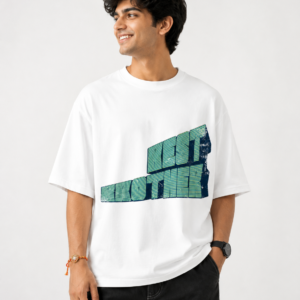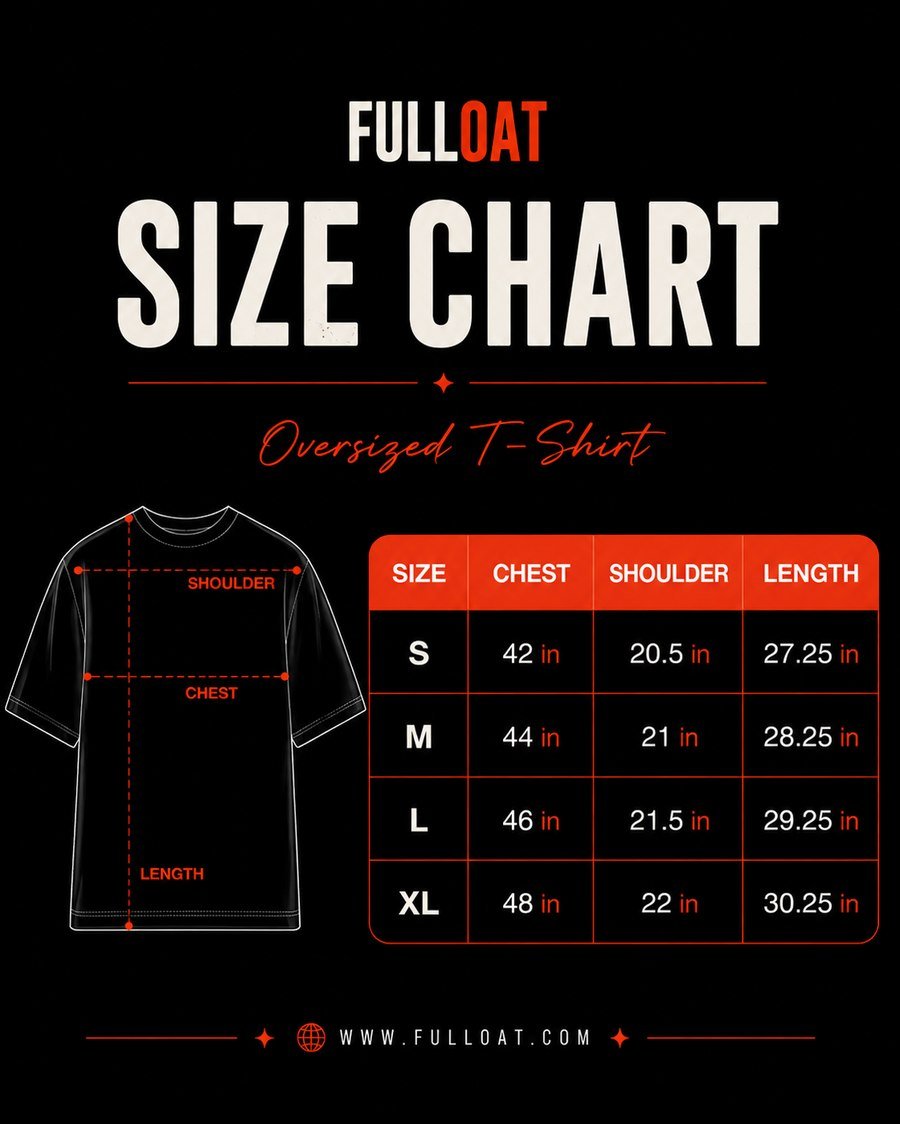
Short answer
GSM means grams per square metre — how much one square metre of the fabric weighs. 220 GSM is heavyweight cotton: opaque, structured, holds a boxy shape. 180 GSM is lighter and drapes closer to the body. Most high-street tees are 140–180 GSM.
That number sits on every product page we publish. Here is what it actually tells you — and why the highest number is not automatically the best buy.
Where the numbers sit
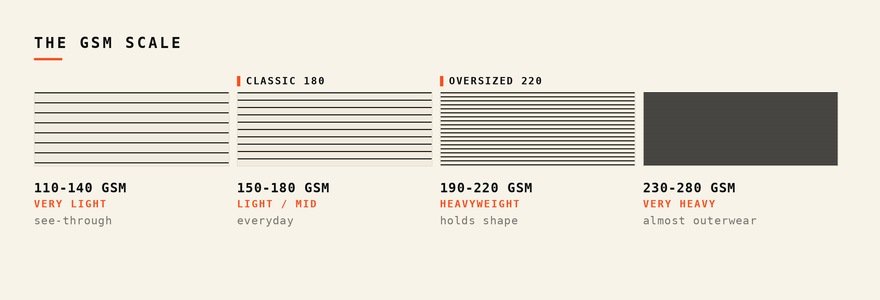
Most Indian high-street t-shirts land in the 140–160 band. It is cheap to make and comfortable in heat, which is a fair trade for a plain tee. It is also why those shirts lose their shape after a dozen washes.
One thing worth being clear about: GSM measures density, not quality. A badly spun 240 GSM cotton will pill in a month. A well-made 180 GSM tee will outlast it. GSM tells you how a shirt behaves — not how well it was made.
Why weight changes the way a tee looks
This is the part most people miss. Weight is not only about durability — it is what makes an oversized fit read as deliberate instead of accidental.
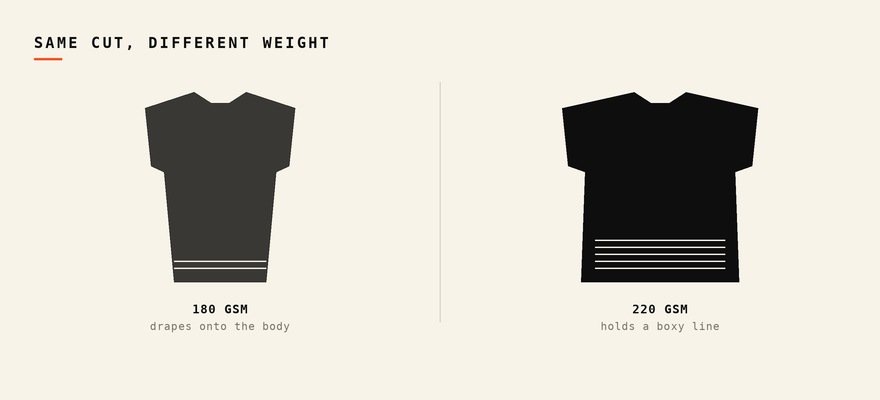
In light fabric, the extra material of an oversized cut collapses onto you and the silhouette disappears. At 220 GSM the cloth has enough body to stand away — the dropped shoulder stays where the pattern intended and the sides fall straight. That structure is doing as much work as the print on the front.
Which is why our oversized range is built at 220 GSM and our classic fits at 180. Different jobs, different weights.
The case against the heaviest tee
Plenty of brands treat GSM as a leaderboard. That is marketing, not physics.
Heavier cotton is warmer and slower to dry. In a Delhi or Chennai summer a 240 GSM tee is genuinely uncomfortable in a way a 160 GSM one is not, and through monsoon it never quite dries. Past roughly 230 GSM a t-shirt starts behaving like light outerwear.
We landed on 220 because it is the point where fabric holds structure without becoming a jacket.
Which GSM for which season?
| When | Pick | Why |
|---|---|---|
| April–June | 150–180 GSM | Breathes, dries fast |
| Monsoon | 150–180 GSM | Anything heavier stays damp |
| Oct–March | 200–220 GSM | Warm enough alone, layers well |
| AC offices | 220 GSM | The weight is welcome at 18°C |
How to check GSM without a label
- Hold it to the light. See your hand clearly through one layer? Under 160 GSM. A 220 GSM tee is essentially opaque.
- Crush the hem and let go. Light fabric stays crumpled. Heavy fabric springs back straight.
- Weigh it. A medium uses roughly 0.9 m² of fabric — so 180 GSM lands near 165 g, 220 GSM near 200 g. Kitchen scales are accurate enough.
Does GSM affect how a print lasts?
Indirectly. A print sits on the surface of the knit, and denser fabric flexes less when the shirt stretches — so the print cracks later. But heat matters far more. A tumble dryer destroys a print on 240 GSM just as fast as on 140.
Inside out, cold water, dry in shade. That does more for print life than any amount of GSM.
Frequently asked questions
Is 220 GSM good for a t-shirt?
Yes, for oversized and structured fits. 220 GSM is heavyweight cotton that stays opaque, holds a boxy silhouette and survives washing well. It runs warm, so it suits autumn through spring in most of India, or year-round in air conditioning.
Is higher GSM always better?
No. GSM measures fabric weight, not quality. A well-made 180 GSM t-shirt will outlast a poorly made 240 GSM one, and heavier fabric is warmer and slower to dry — a real disadvantage in Indian summers.
What is the difference between 180 GSM and 220 GSM?
About 22% more fabric per square metre. In practice 220 GSM feels noticeably thicker, is fully opaque and holds its shape away from the body. 180 GSM is lighter, drapes closer and breathes better in heat.
What GSM is a normal t-shirt?
Most mass-market t-shirts are 140 to 180 GSM. Promotional and giveaway tees are often 110 to 140 GSM. Anything at or above 200 GSM counts as heavyweight.
Does a 220 GSM t-shirt shrink?
All cotton shrinks slightly on the first wash, usually two to three percent. Denser knits shrink a little less. Wash cold and dry in shade rather than a tumble dryer and shrinkage stays minimal.
GSM is one number on a spec sheet, but it decides whether a t-shirt keeps its shape or gives up after a season. Worth checking before you buy anything — from us or anyone else.